
Harold Holt Joy’s Leeds

In these pages you’ll meet the Joy family of Leeds, their Victorian world, and musings about what went so terribly wrong.

Recent Posts

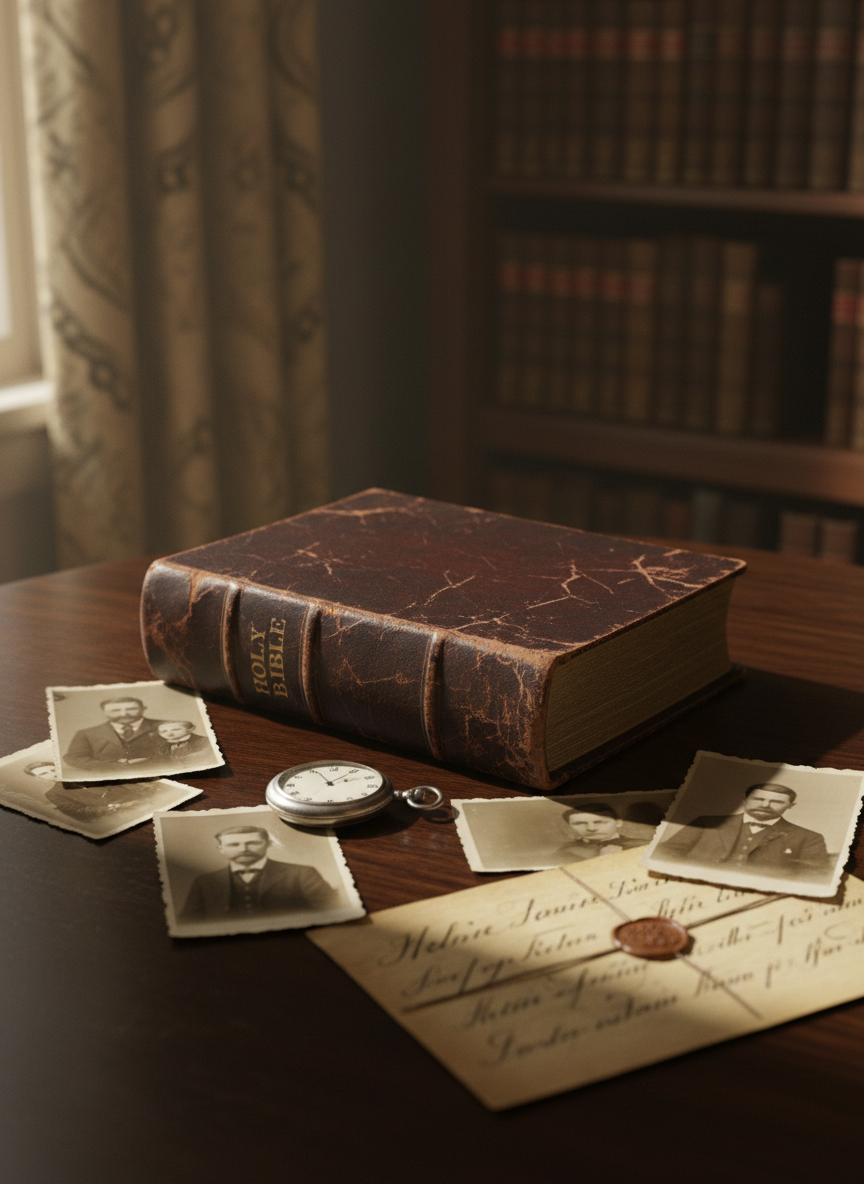
A worn, leather-bound Victorian family Bible lies closed on a dark, polished oak table, its cracked spine and gold-embossed title catching faint light. Around it are scattered sepia-toned photographs, a tarnished pocket watch, and a folded, yellowing letter with spidery ink handwriting. Soft, overcast window light from the left creates gentle highlights along the leather grain and long shadows across the wood. The background falls into a subtle blur of bookcases and heavy drapery. Photographic realism, eye-level composition with shallow depth of field, conveys a reflective, slightly melancholic atmosphere, suggesting buried family stories and the quiet weight of the past.
An intricately detailed, antique map of Leeds circa late 19th century is spread flat across a large, scratched wooden desk, its edges curled and fraying. The paper is cream with age spots, streets drawn in fine black lines and key districts highlighted in delicate muted colors. Beside it, a brass magnifying glass rests partly over the city center, and a stub of a graphite pencil lies nearby. Warm afternoon light from an unseen side window traces bright lines along the magnifying glass rim and emphasizes creases in the paper. Photographic realism, shot from a slightly elevated angle with sharp focus throughout, evokes a mood of investigation and historical inquiry.
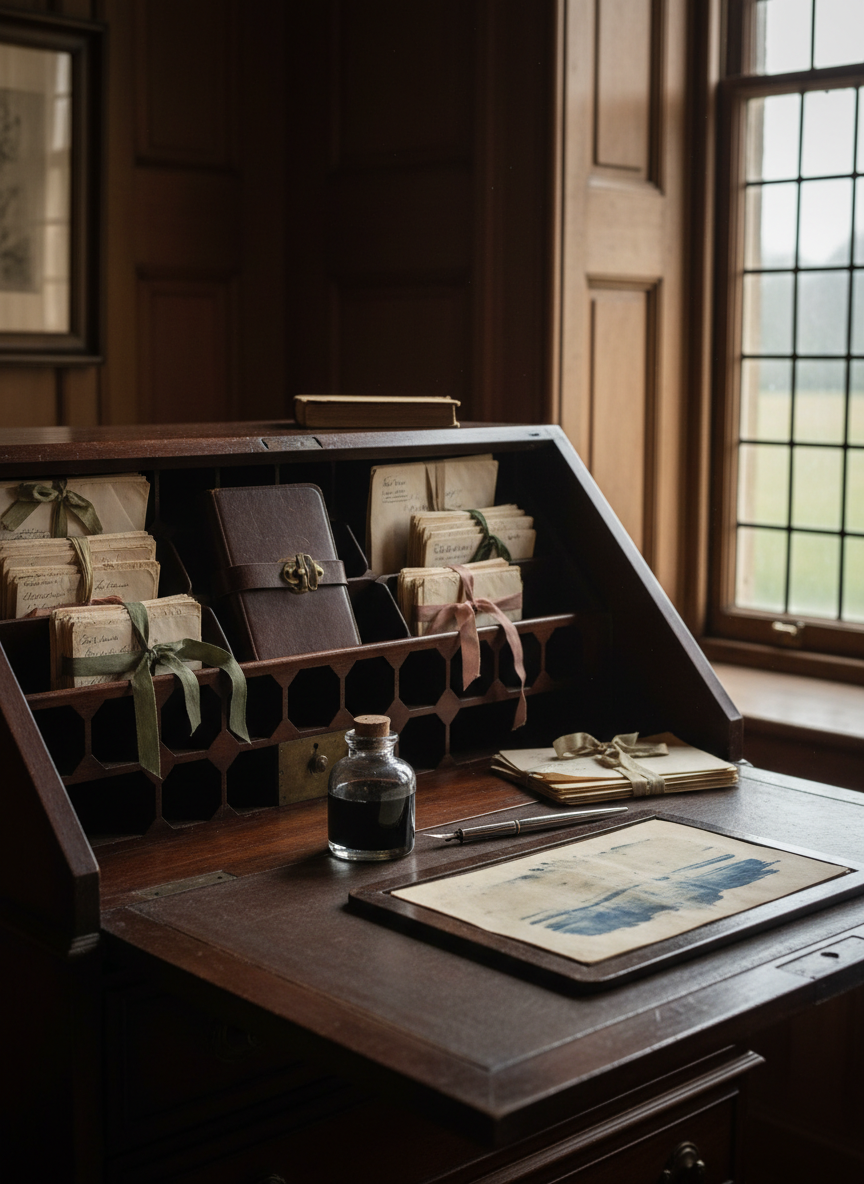
A meticulously arranged Victorian writing bureau stands open, revealing pigeonholes stuffed with folded, brittle letters, a leather-bound diary, and labeled envelopes tied with fading silk ribbons. On the pull-out writing surface sits a heavy black ink bottle, a metal dip pen, and a blotter stained with deep blue and brown marks. Ambient daylight from a narrow sash window at the side creates a soft, directional glow that illuminates dust motes in the air and leaves the deeper compartments in shadow. Photographic realism, composed using the rule of thirds with moderate depth of field, creates an atmosphere of restrained elegance and quietly suppressed secrets.

Victorian Leeds

Explore the early Victorian Leeds that shaped Harold Holt Joy and his family, especially his very earnest father, William Glover Joy.
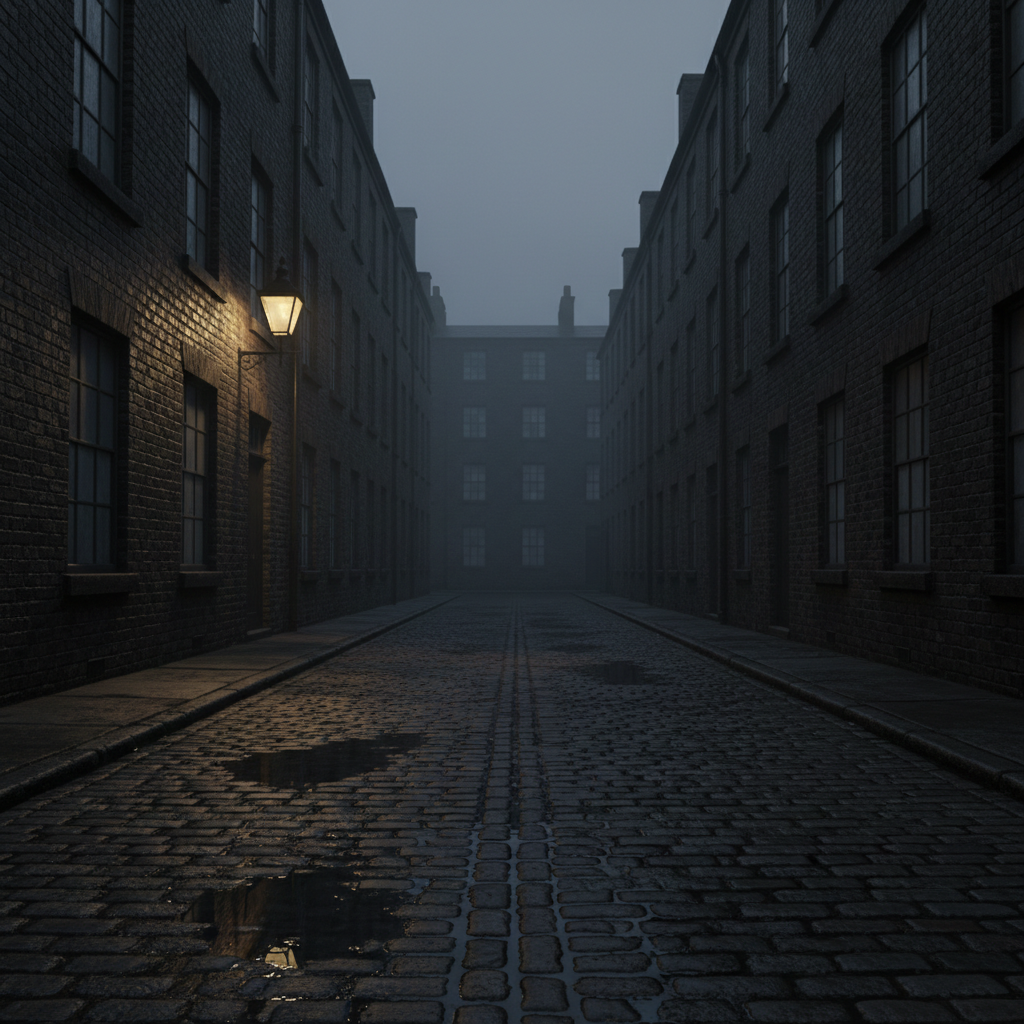
A narrow cobbled alley in Victorian Leeds is rendered as a deserted streetscape at dusk, devoid of any figures. Tall, soot-darkened brick terraces rise on either side, their windows grimy and opaque. One gas lamp mounted on a wall casts a pale, yellowish pool of light onto wet cobblestones, highlighting puddles and worn stone edges, while the far end of the lane dissolves into foggy darkness. The camera is placed low to the ground, looking down the alley, with strong linear perspective drawing the eye inward. Photographic realism, with moody, low-key lighting, creates an atmosphere of foreboding and urban hardship.

← Back

Thank you for your response. ✨